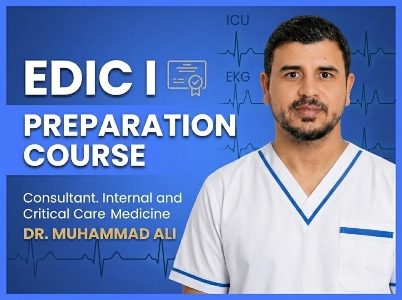
The EDIC I Preparation Course is a structured, system-by-system review built specifically around the official EDIC Part I blueprint. Rather than working through generic slide decks, you’ll be guided directly by a practicing adult critical care consultant who applies these exact concepts in ICU practice every day.
Each topic is taught the way it actually shows up on the exam and in real patient care — connecting pathophysiology to bedside decision-making, so concepts stick instead of being memorized and forgotten. Because the course is led by one dedicated mentor from start to finish, you get a single, consistent teaching voice across every organ system, with direct access for questions throughout your preparation.
Whether you’re sitting EDIC I for the first time or revising after a previous attempt, this course is built to close knowledge gaps efficiently and build the exam confidence you need.
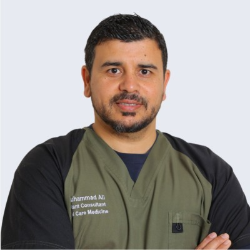
Dr. Muhammad Ali is a Consultant in Internal Medicine, Consultant in Critical Care Medicine, and an EDIC (European Diploma in Intensive Care) Consultant with extensive experience in managing critically ill patients across tertiary care and transplant settings.
He currently serves as an Assistant Consultant in Adult Critical Care Medicine at the Organ Transplant Centre of Excellence, King Faisal Specialist Hospital & Research Centre (KFSH&RC), Riyadh, Saudi Arabia, a position he has held since 2024. In this role, he provides advanced critical care for complex medical and surgical patients, including organ transplant recipients, while contributing to multidisciplinary patient management, education, and clinical excellence.
Throughout his career, Dr. Ali has developed expertise in internal medicine, intensive care, and evidence-based critical care practices. He is committed to advancing medical education and is passionate about sharing practical, up-to-date clinical knowledge with healthcare professionals.
As a course instructor, Dr. Ali combines strong academic knowledge with real-world clinical experience, offering learners practical insights into the diagnosis, management, and critical care of complex patients.